Motorcycle Riding Style To Avoid Accidents
Traffic Lights
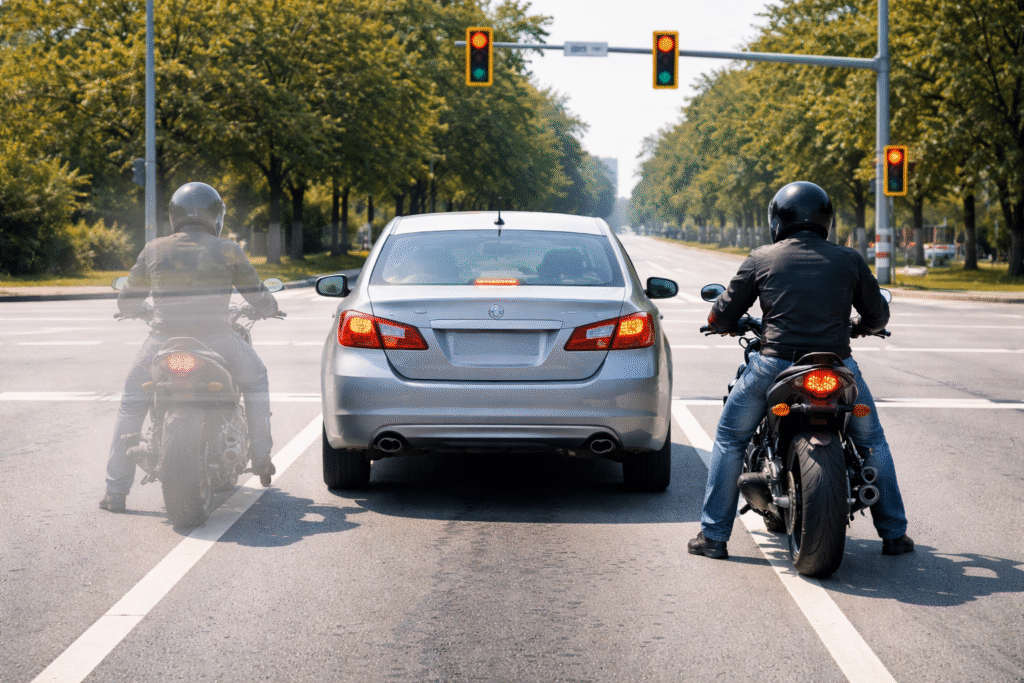
Traffic lights, believe it or not, are where a lot of bad accidents happen. You’re surrounded by potential problems: a car losing control and sliding into you from the other side of the road, or getting rear-ended by someone sending selfies on Snapchat. You’re either getting run over or pinned between cars.
When I’m at the lights, I watch my mirrors as cars approach from behind. I look at my surroundings and observe what every car is doing. It pays to stay aware—the danger is usually other cars, not your riding. You don’t need to get paranoid or anxious, just alert.
I never sit directly behind a car at a light. You should sit to either the left or the right.
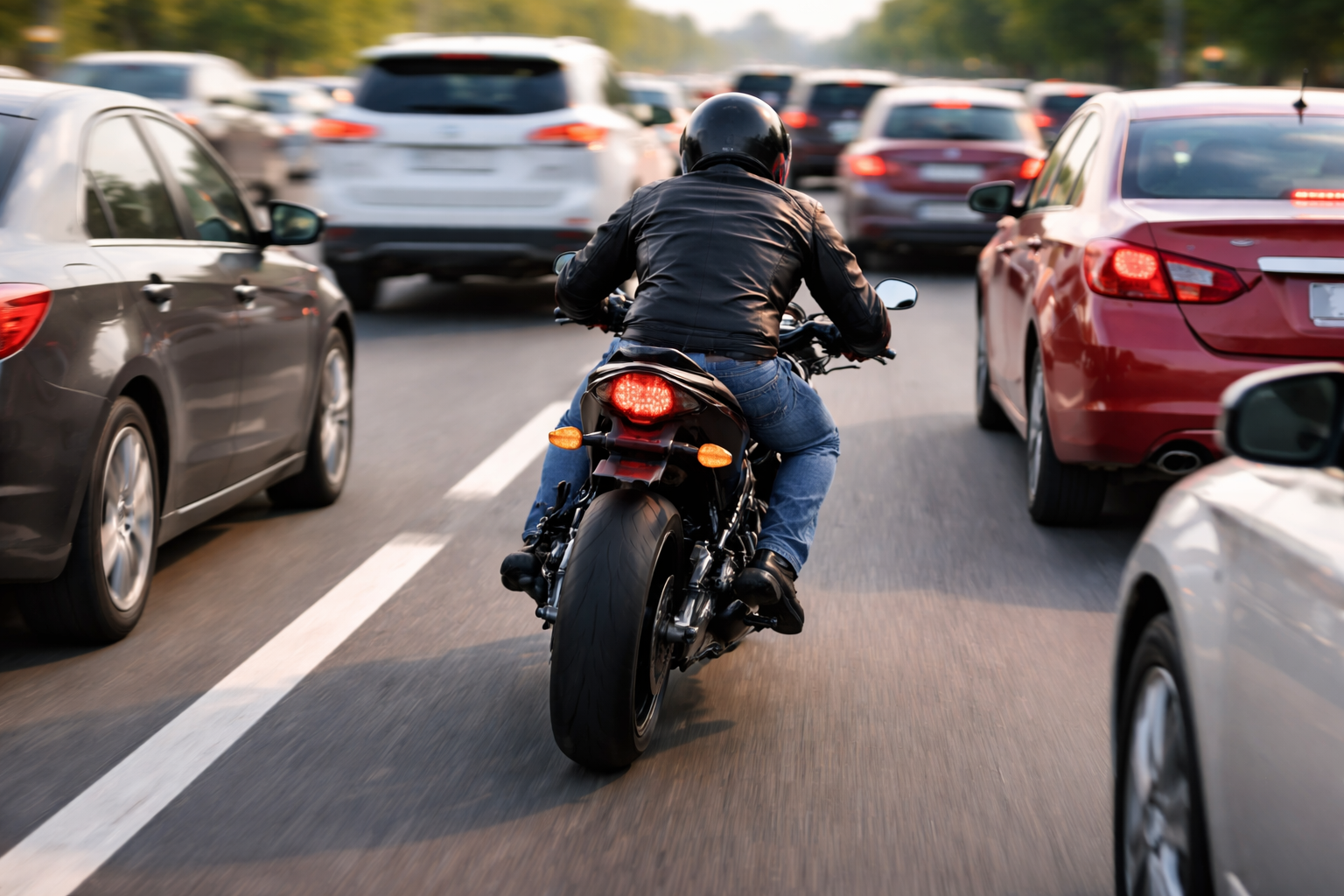
Getting rear-ended while sitting directly behind a car will likely leave you pinned between the two vehicles. It doesn’t take much of an impact to kill you. Crush injuries are terrible. If the option is there, lane-split and get to the front—it’s much safer than sitting in a pinch point. Better to be ahead of all the distracted capsule pilots and leave them to their own devices.
If you are the first to arrive at a red light, do the same thing: sit slightly left or right.
Sit there holding only the rear brake with your foot. Don’t hold the front brake. If you get rear-ended while holding the front brake, your bike will fall over instantly and you’ll end up underneath the car. If you hold no brakes, you could be bumped out into traffic and get T-boned. Holding the rear brake keeps you upright and (hopefully) stops you from being pushed out into traffic.
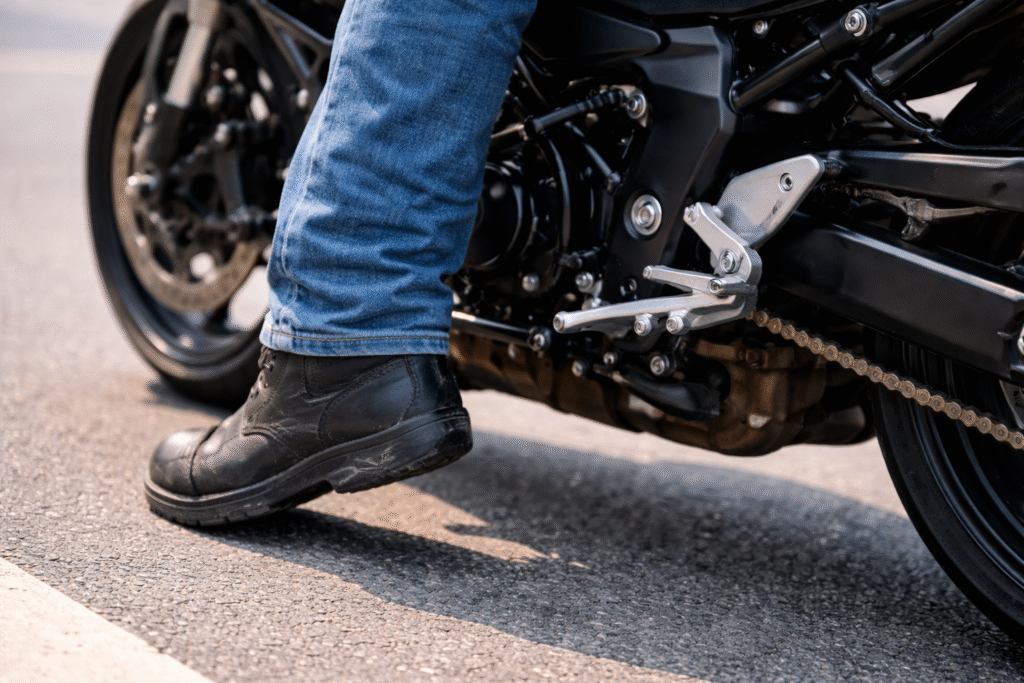
Sitting on the Centre Line on a Single-Lane Highway
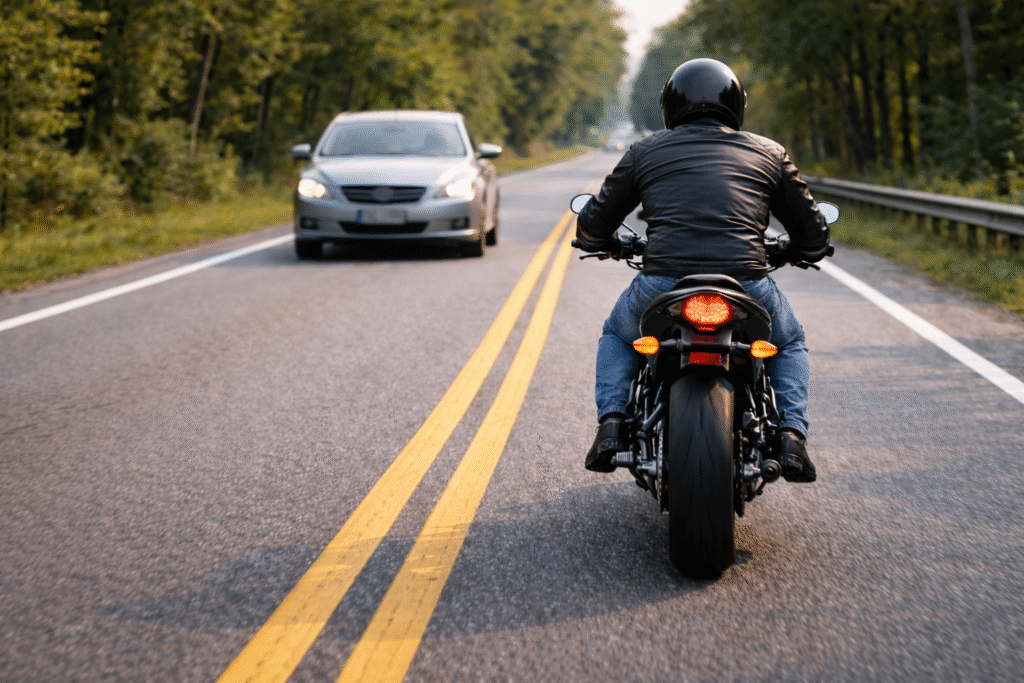
Cars are flying toward you, and the only thing separating you from them is a bit of paint. They’re a metre or less away from ending your life. All it takes is a slight movement of their wrist—a sneeze, changing a song, checking a phone, a medical issue—to drift into your lane. A moment of bad luck is all it takes to end up kissing their bonnet.
So don’t sit near the centre line when a car is coming toward you. Move over to the opposite side until they pass. Give yourself more room for their error. If they drift into your lane, your chances of avoiding a head-on are much better if you’re already positioned further away and ready.
It has happened to me more times than I can count on both motorbikes and in cars. If I hadn’t been paying attention, a couple of those times would have ended in a crash.
When a Car Wants to Pull Out Onto the Road You’re On
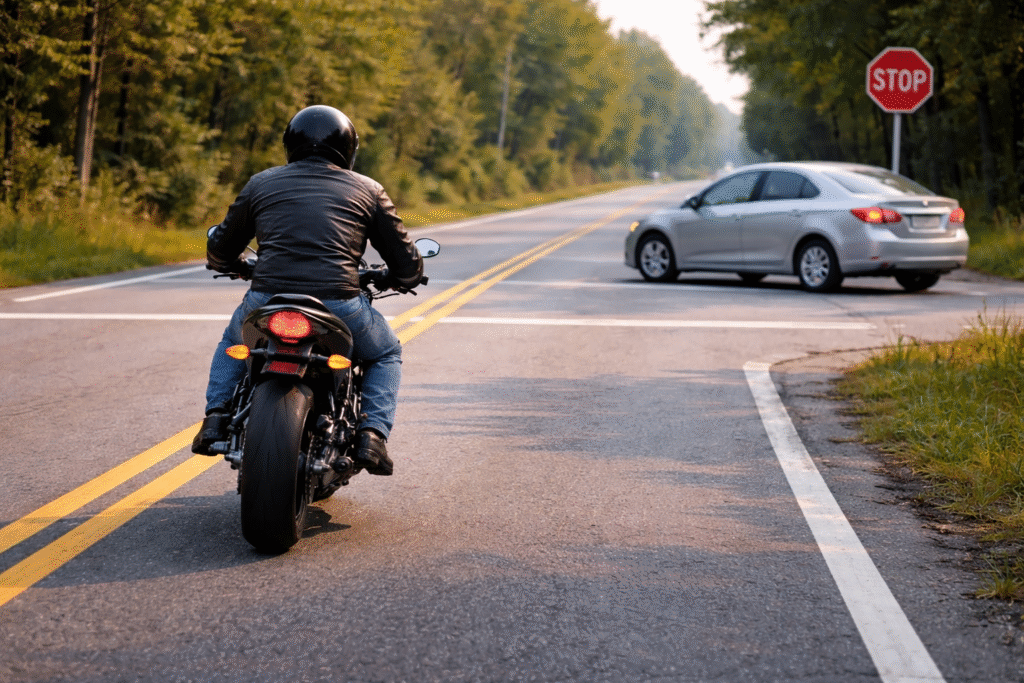
Sitting on the edge of your lane is a bad idea in this situation. It signals to the driver that you are about to turn. Drivers see your position and predict your path—they take their foot off the brake, put it on the accelerator, and prepare to pull out. Some don’t wait.
In this case, I sit between the centre and the middle of the lane.
Show Your Intentions
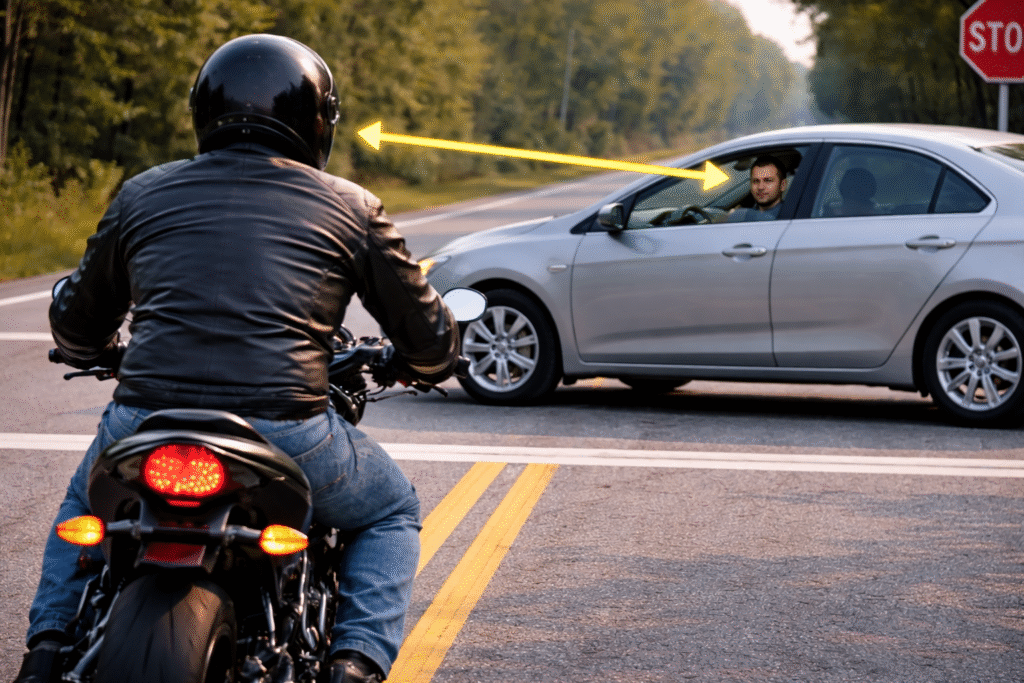
Ride in a way that signals what you’re about to do. Don’t rely solely on blinkers or road rules—people do erratic things without thinking, and most aren’t paying attention.
Do things that grab their attention. If a car looks like it’s about to do something stupid, start swerving slightly left to right. Make yourself seen. Look the driver directly in the eyes—this always gets attention. If they see you looking at them, they look back. Now you aren’t invisible.
Moral of the Story
Assume you are invisible. You aren’t surrounded by a metal cage—you have more risk, so you need to pay more attention. Be aware of your surroundings, observe people, use tactics like the ones above to be seen, and think about your positioning. They’re simple habits that can make a big difference.
Ride defensively so what happens on the road is more in your hands and less in theirs.